
Sandals for Girls and Women: Types, Fit and Support
In Pakistani shopping language, sandals for girls often refers to styles for teenagers and adult women as well as children. This article focuses on adult and young-adult footwear. Sandals range from flat everyday designs to heeled formal pairs, and the useful comparison is not age wording but strap security, sole grip, fit and the setting where they will be worn.
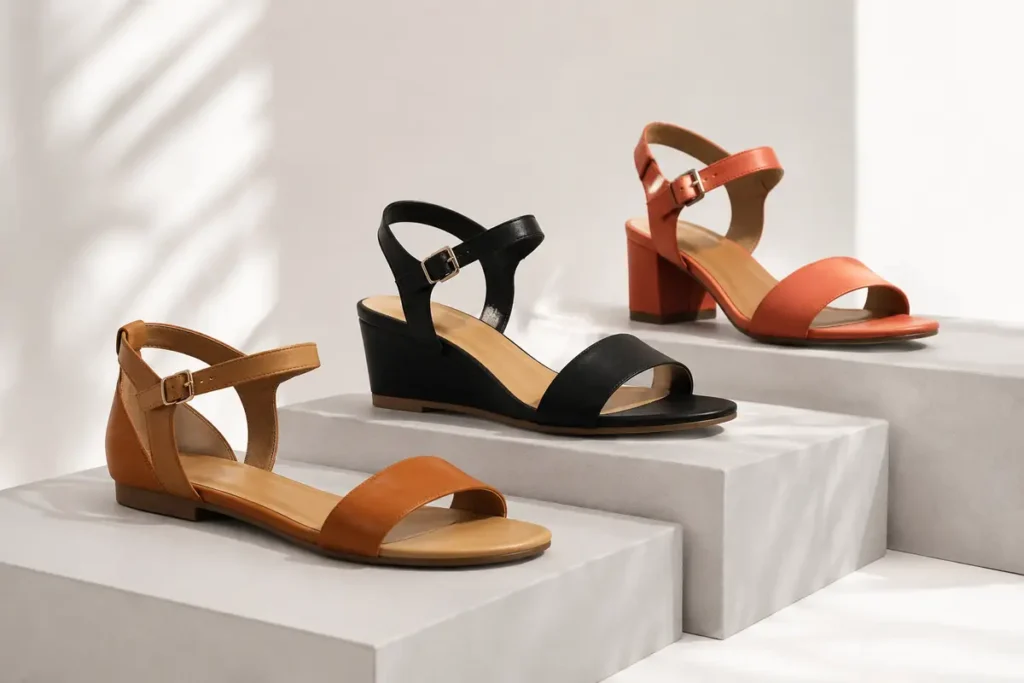
sandals for girls: what the term actually means
A sandal leaves part of the foot open and uses straps, bands or an upper section to hold it to the sole. It may be flat, wedged or heeled. Open footwear can feel lighter in warm weather, but loose straps and thin soles may increase rubbing or make the toes grip.
Slide, sandal, slingback and slipper are not identical. A slide has an open back and usually no rear strap. A sandal may use ankle or heel straps. A slipper is generally intended for home or casual use. Retail names overlap, so inspect the actual closure and coverage.
- Flat ankle-strap sandal: A rear or ankle strap improves hold for walking when adjusted correctly. Check that it does not sit on the ankle bone.
- Slide sandal: Easy to put on but open at the back. The forefoot band must hold without forcing the toes to grip.
- Block-heel sandal: A raised formal option with a wider heel base. Secure forefoot and ankle straps are important as the foot moves down the slope.
- Wedge sandal: The raised sole continues under the foot. Sole flexibility, platform height and upper hold affect how natural it feels.
Fit comes before styling
The foot should sit fully on the sole without toes or heel extending past the edges. Straps should contact the foot without cutting, and the shoe should move at the same time as the foot. A decorative sandal that slaps, twists or requires toe gripping is not suitable for long walking.
- Check the front edge while standing; toes need a small protective margin and should not hang over.
- Look at the heel from behind and make sure it sits centred on the sole.
- Walk and listen for repeated slapping, which can indicate weak hold or an unsuitable fit.
- Test every buckle and strap hole for a secure setting that does not leave a long loose end.
- Inspect the outsole pattern and flex point, especially for smooth tile or outdoor paths.
Compare the seller measurements with the Shoezhub shoe size guide. The printed size is only a starting point because width, toe shape, straps, lining and construction determine the space the foot can actually use.
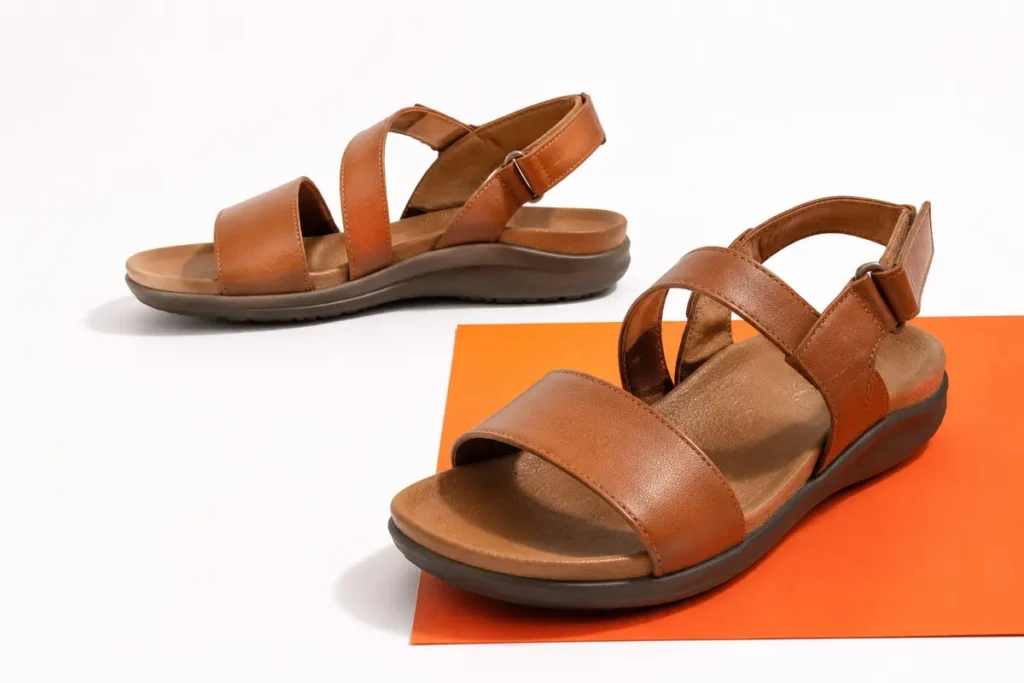
Separate everyday sandals from event sandals
Daily sandals need secure straps, a practical sole and materials that tolerate dust and repeated wear. Formal sandals may use slimmer straps, higher heels and delicate finishes. Do not expect one heavily embellished pair to perform like an everyday walking shoe simply because both are called sandals.
For shalwar kameez, jeans and casual dresses, simple flats or low wedges keep the outfit relaxed. For weddings and dinners, heeled sandals can expose jewellery and pedicure details without the visual weight of a pump. Check that long hems cannot catch on buckles or back decorations.
Materials, construction and care
Wipe dust from straps and the footbed after wear. Let damp sandals dry naturally away from direct heat. Follow the material instructions and avoid soaking glued or embellished designs.
Check strap anchors, buckles and the outsole edge regularly. Stop using a pair if a strap begins pulling away or the sole separates. Store formal sandals in separate bags so stones and metal parts do not scratch other shoes.
Shopping online in Pakistan: what to verify
Size charts for sandals should include foot length, not just a local size number. Look for top, side and rear photographs. If the seller shows only a styled front view, ask about the closure, heel height and outsole before ordering.
- Check the upper, lining and sole materials instead of judging only from colour.
- Look for a measured heel height, closure details and a usable size chart.
- Inspect the outsole, heel attachment and strap anchors in clear photographs.
- Read the returns and exchanges terms before removing labels or wearing the pair outdoors.
- Confirm current charges and service information on the shipping and delivery page.
Shoezhub currently focuses on selected women\’s occasion sandals, heels and slides; it does not claim every sandal type described here is stocked. Browse the current Shoezhub store for live availability; this guide does not promise that a colour, design or size is currently stocked.
Common mistakes to avoid
Sandal listings often lead with decoration, while the holding system receives less attention. Avoid these errors.
- Letting toes or heel extend beyond the sole because an open design appears more forgiving than a closed shoe.
- Tightening only the ankle strap to control a forefoot that continues to slide forward.
- Treating a party sandal as an everyday walking shoe without checking sole, strap anchors and route.
- Choosing the same numeric size used in every closed shoe without comparing foot length and footbed width.
A short indoor trial, accurate product information and a realistic view of the route usually reveal these problems before the pair is committed to outdoor wear.
Questions shoppers ask about sandals for girls
How should sandals fit at the front?
The toes should rest naturally on the footbed and stay behind the front edge. They should not curl to grip or extend beyond the sole while standing.
Are slides good for long walking?
Some slides fit securely, but open-back construction often provides less hold than a sandal with a rear strap. Judge the specific footbed, upper and route.
Which sandal is best for a wedding?
Choose for venue surface, outfit length and time on your feet. A secure block-heel sandal may suit halls, while flats or wedges can be more practical outdoors.
Can I use the same size in every sandal?
Not reliably. Open-toe shape, width, strap position and brand sizing vary. Compare measurements and try both feet indoors.
Choose for the way you will wear them
Choose sandals by the way they hold the foot and meet the ground. Labels such as girls, ladies, flat or party wear are only category clues. A secure strap, centred footbed, adequate toe space and suitable outsole provide a better basis for comparison.
Continue with Flat Sandals: Comfort and Everyday Fit Guide and Women\'s Heeled Sandals: Fit and Occasion Guide.
Sources and review notes
This article uses fit guidance from the American Academy of Orthopaedic Surgeons, shoe-selection advice from Guy’s and St Thomas’ NHS Foundation Trust, and sandal guidance from the American Podiatric Medical Association. It is general educational information, not a diagnosis. Persistent pain, numbness or skin injury deserves advice from a qualified healthcare professional.