
Women’s Heeled Sandals: Fit, Support and Occasion Guide
Women’s heeled sandals combine an open upper with a raised heel, making them a popular choice for weddings, dinners and warm-weather formal wear. The open design shows more of the foot but also gives it more ways to move. Strap placement, heel base, pitch and toe position therefore matter as much as the measured height.
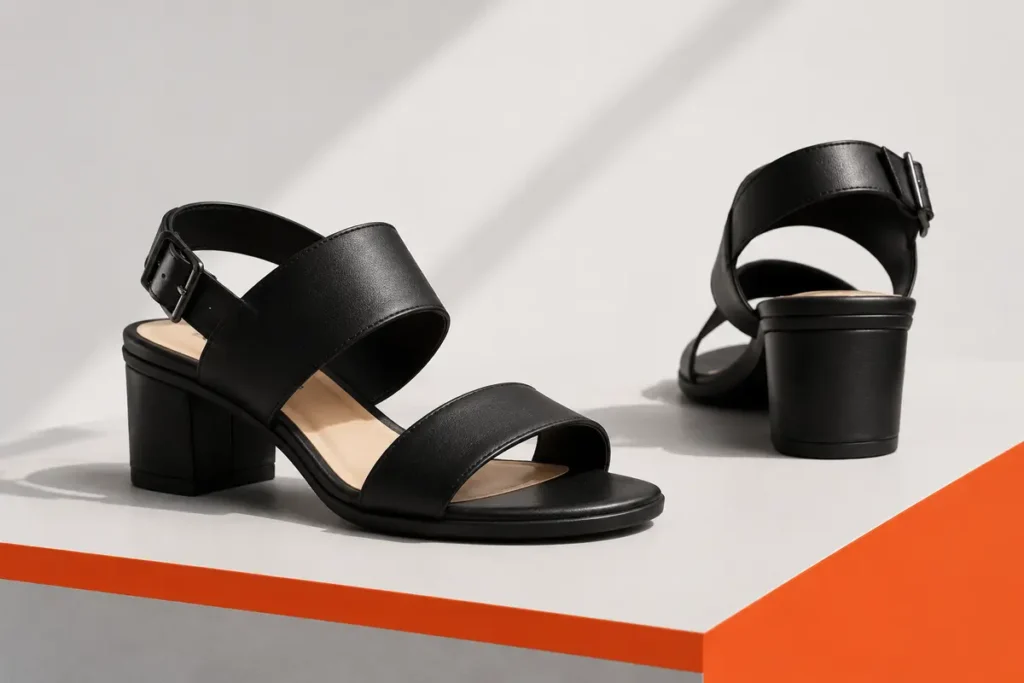
women's heeled sandals: what the term actually means
A heeled sandal uses straps or open sections rather than a fully enclosed pump upper. It may have a block heel, stiletto, wedge or kitten heel. Some close at the ankle; others use a slingback or open-back slide. These structures are not equally secure.
A sandal is not necessarily cooler or more comfortable than a pump. Thin straps can concentrate pressure, and an open toe can allow the foot to slide forward. A well-fitted pump may feel more controlled than a loose sandal of the same height.
- Block-heel ankle strap: A wider heel and adjustable strap create a practical formal combination for many indoor events.
- Stiletto sandal: A slim heel and fine straps produce a delicate line but demand a stable surface and precise fit.
- Wedge sandal: The connected sole provides a broad base, although weight, flexibility and platform height change ground feel.
- Heeled slide: The open back gives easy entry and a clean look, but forefoot bands must hold the shoe without toe gripping.
Fit comes before styling
The heel should sit centred, the toes should stay behind the front edge and the forefoot should not slide under the straps. Check that the ankle strap is a holding point rather than the only part preventing the foot from moving forward.
- Stand for several minutes and watch whether the foot gradually moves towards the open toe.
- Check each strap edge for pressure across toe joints, the instep and the ankle bone.
- Walk, turn and stop to reveal sideways movement or an open back that lags behind.
- View the heel from behind and confirm that it remains vertical under normal weight.
- Test the buckle position and make sure the remaining strap does not catch a long hem.
Compare the seller measurements with the Shoezhub shoe size guide. The printed size is only a starting point because width, toe shape, straps, lining and construction determine the space the foot can actually use.
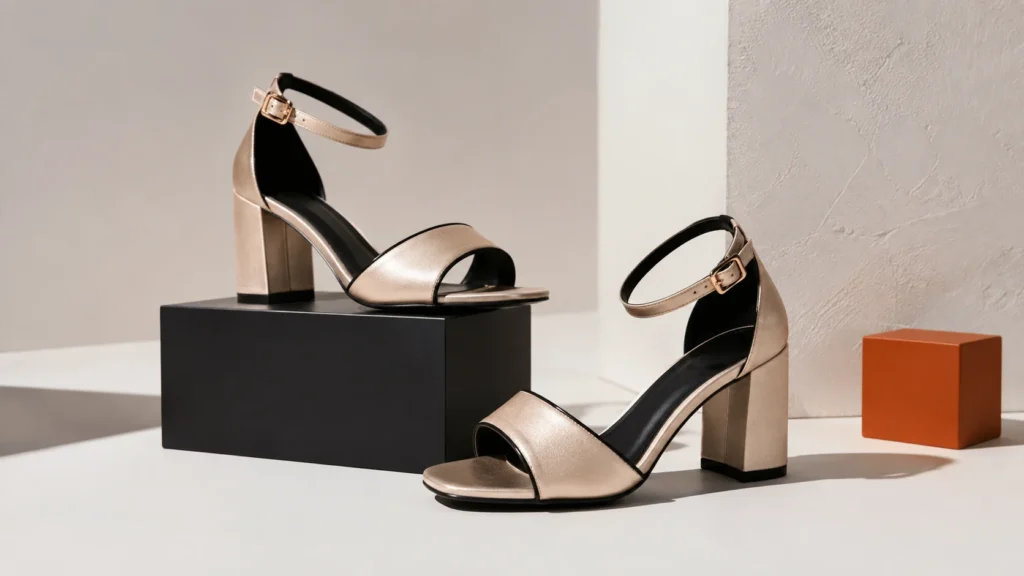
Let the venue determine the heel base
Polished halls and short indoor routes can suit a refined block or slim heel when the outsole grips. Lawns, marquees, rough paving and long approaches favour a wider base, wedge or flat. A venue photo is more useful than choosing only from the dress.
Heeled sandals work under saris, lehengas, ghararas, maxis and tailored trousers. Open designs can balance heavy fabric, but too many crystals, bows and metallic details may compete with embroidery. Repeat one outfit element instead of copying every colour.
Materials, construction and care
Clean the footbed and straps according to material, then let the pair dry completely. Do not soak embellished or glued sandals. Use a soft brush only where the material guidance permits it.
Inspect buckles, strap anchors, heel tips and outsole edges before each major event. Store the shoes with straps fastened loosely in their natural shape so they are not bent or crushed.
Shopping online in Pakistan: what to verify
A useful product page shows the sandal from front, side and rear, states heel height and identifies the closure. Ask whether the straps adjust and whether the outsole has texture. Read the size chart for foot length and width information.
- Check the upper, lining and sole materials instead of judging only from colour.
- Look for a measured heel height, closure details and a usable size chart.
- Inspect the outsole, heel attachment and strap anchors in clear photographs.
- Read the returns and exchanges terms before removing labels or wearing the pair outdoors.
- Confirm current charges and service information on the shipping and delivery page.
Shoezhub\’s selected women\’s occasion collection includes heeled sandals and related formal styles, subject to current stock. Browse the current Shoezhub store for live availability; this guide does not promise that a colour, design or size is currently stocked.
Common mistakes to avoid
A heeled sandal must manage both an open upper and a sloped footbed. These mistakes commonly reduce control.
- Depending on the ankle strap to stop all forward movement instead of checking the forefoot bands and size.
- Allowing toes to sit at the front edge while standing, leaving no margin when the foot moves during walking.
- Choosing heel width from a studio photograph without considering lawn, paving, stairs or polished tile at the venue.
- Adding adhesive pads without testing whether they crowd the straps or alter where the ball of the foot rests.
A short indoor trial, accurate product information and a realistic view of the route usually reveal these problems before the pair is committed to outdoor wear.
Questions shoppers ask about women's heeled sandals
Which heeled sandal is easiest to walk in?
Many shoppers find a moderate block heel with broad, secure straps easier than a narrow heel. Personal fit and the surface remain decisive.
Should toes reach the end of an open sandal?
No. They should stay behind the front edge with a small margin and should not overhang during standing or walking.
Are ankle straps always more secure?
They can improve hold, but they do not correct a loose forefoot or wrong size. The whole upper should control movement.
Can heeled sandals work with formal trousers?
Yes. A clean open toe or slim straps can complement tailored trousers. Check trouser length so the hem does not catch under the heel.
Choose for the way you will wear them
Choose a heeled sandal as a system: heel base for the ground, straps for hold, footbed for placement and finish for the outfit. When those parts work together, the open design looks lighter without forcing the foot to fight for control.
Continue with Block Heels: Comfort and Styling Guide and Sandals for Girls and Women: Types and Fit.
Sources and review notes
This article uses fit guidance from the American Academy of Orthopaedic Surgeons, shoe-selection advice from Guy’s and St Thomas’ NHS Foundation Trust, and sandal guidance from the American Podiatric Medical Association. It is general educational information, not a diagnosis. Persistent pain, numbness or skin injury deserves advice from a qualified healthcare professional.