
Soft Slippers for Women: Comfort, Fit and Home Use
Soft slippers for women are bought for home use, short indoor routines and rest after work or events. Softness is easy to notice, but it does not describe grip, stability, warmth or how securely the slipper stays on. A practical comparison looks at the upper, footbed, outsole and whether the design is meant to remain indoors.
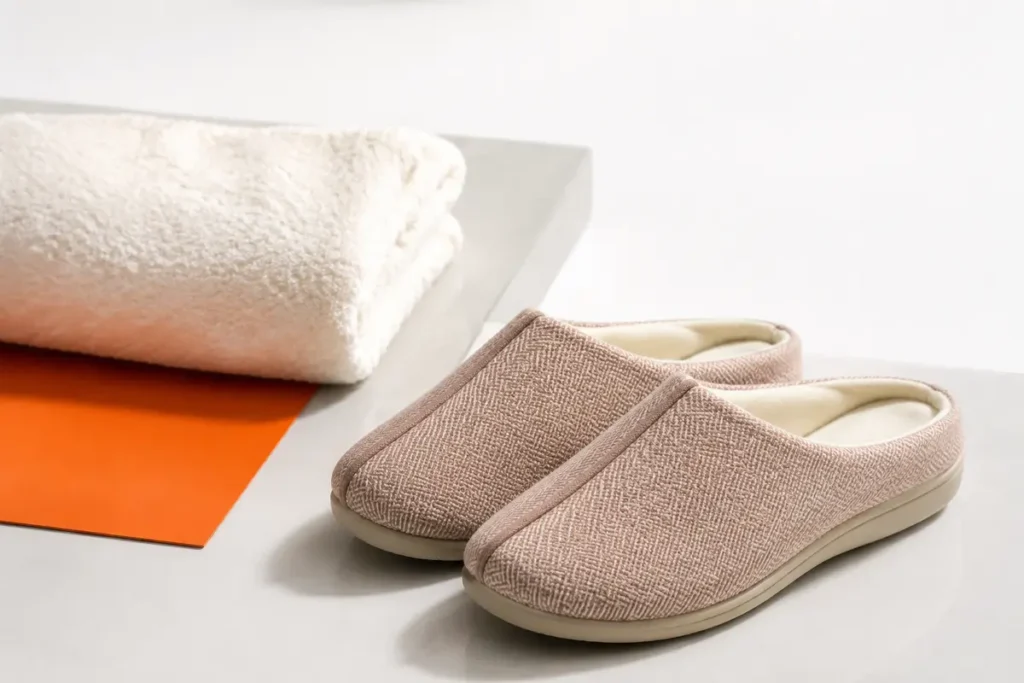
soft slippers for women: understand the construction first
A soft slipper usually uses textile, fleece, knit, padded synthetic or soft leather-like materials. It may have an open toe, closed toe, open back or heel collar. Some use a thin indoor sole; others have a rubber outsole for limited outdoor steps.
Slippers are not the same as walking shoes, even when the outsole looks substantial. Open backs and very soft uppers may provide less hold. Marketing words such as memory, cloud or orthopedic should not be treated as medical proof without clear specifications and appropriate evidence.
- Closed-toe mule slipper: Warm and easy to put on, with an open back. The upper must hold without forcing toe gripping.
- Open-toe slide slipper: Suited to warmer rooms and short wear. Broad bands generally spread pressure better than narrow edges.
- Full-back house shoe: A heel collar improves hold and can suit users who dislike open-back movement.
- Washable textile slipper: Convenient when the care label permits washing, but drying and shape retention need attention.
Fit comes before appearance
The heel should not hang far beyond an open back, and the toes should lie flat. A loose slipper can twist on stairs; a tight one can compress toes or leave deep upper marks. Test on the actual indoor floors where it will be used.
- Walk on tile and carpet to compare grip and whether the slipper catches at the front.
- Use a step carefully and notice if the open back slips sideways.
- Check internal seams with a hand for rough joins or hard labels.
- Confirm the outsole stays flat rather than rocking on thick uneven padding.
- Try both feet later in the day and leave enough room for planned socks.
Use foot measurements with the Shoezhub size guide, but also read the product-specific chart. Width, toe shape, lining and closure can change the fit even when two pairs carry the same size.
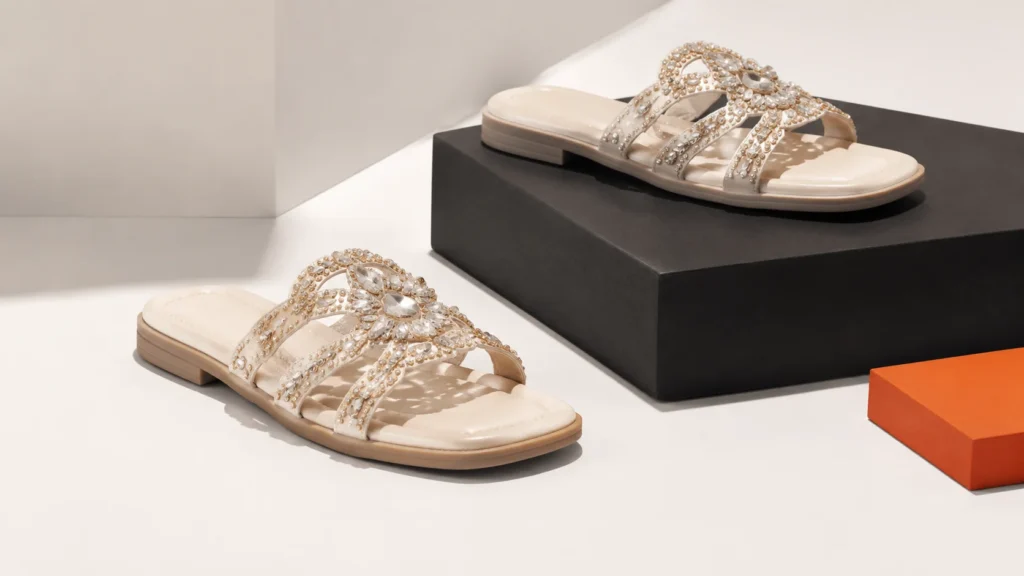
Match the slipper to the home and season
Warm padded slippers suit cooler rooms and winter mornings, while open slides feel lighter in hot weather. Homes with polished tile need reliable outsole texture. Stairs favour a secure back or close-fitting upper rather than an oversized open mule.
Keep indoor slippers separate from footwear used on streets and wet areas. A durable outsole may allow a quick clean step outside, but repeated outdoor use brings dirt inside and can wear a soft upper faster than intended.
Cleaning, drying and storage
Follow the care label. Some textile slippers can be hand or machine washed; others contain foam, glue or structured components that should not be soaked. Dry fully before wearing and avoid direct high heat that can distort soles.
Air slippers after use and rotate pairs if they remain damp. Replace them when grip wears smooth, the footbed collapses unevenly or seams expose rough material. Continued softness does not mean the structure is still sound.
What to verify before ordering online
Look for outsole photographs, wash instructions, upper material and whether sizing accounts for socks. Product names often emphasise feel but omit sole thickness and closure; ask before buying if those details affect safety at home.
- Confirm the upper, lining and outsole materials.
- Look for top, side, rear and sole photographs rather than one styled angle.
- Check closure, sole thickness and any stated care instructions.
- Read returns and exchanges before wearing the pair outdoors.
- Check the current shipping and delivery information before checkout.
Shoezhub currently focuses on women\’s occasion footwear rather than a full house-slipper range, so this article is educational. Use the live store to see current Shoezhub products; educational examples do not represent guaranteed stock.
A practical planning note
Think about the entire home rather than only the bedroom. Tile, rugs, stairs, balconies and kitchen areas place different demands on a slipper. If one pair moves between dry and potentially wet zones, grip and drying become more important. Keep the planned socks nearby during fitting and repeat the trial when feet are warm. A slipper should remain easy to put on without becoming loose enough to twist.
Common mistakes to avoid
Softness is only one property of a house slipper. These mistakes can make an apparently cosy pair inconvenient.
- Buying a larger size by default for comfort, then accepting twisting or heel overhang on stairs.
- Judging grip from a thick sole without looking at the actual outsole texture and wear pattern.
- Machine washing a bonded or foam-filled slipper when the label does not permit it.
- Continuing to use collapsed padding or a smooth outsole because the upper still feels soft.
A short indoor trial, accurate product information and a realistic view of the route usually reveal these problems before the pair is committed to outdoor wear.
Questions shoppers ask about soft slippers for women
Are very soft slippers better?
Not automatically. Excessively soft or unstable construction may make movement less controlled. The right balance depends on fit, floor and personal needs.
Should slippers be a size bigger?
Only if the seller chart and planned socks require it. Oversized slippers can twist or slip. Measure and use the product-specific guidance.
Can I wash soft slippers?
Only when the care label permits it. Foam, glue, leather-like materials and structured soles may be damaged by soaking or machine washing.
When should I replace house slippers?
Replace them when grip is worn, the sole separates, padding collapses unevenly, odour remains after proper cleaning, or fit no longer feels secure.
Choose the pair that suits real use
Choose a slipper for the surfaces and routines inside the home. Softness should sit on top of a stable, correctly sized base, not replace it. Good grip, smooth internal finishing and complete drying are more useful than an exaggerated comfort label.
Related reading: Flat Shoes for Women: Comfort and Fit Guide and Backless Shoes: Mules, Slingbacks and Slides.
Sources and review notes
General fit and shoe-selection guidance comes from the American Academy of Orthopaedic Surgeons and Guy’s and St Thomas’ NHS Foundation Trust. Sandal-specific safety points are informed by the American Podiatric Medical Association. This is general information, not medical diagnosis or treatment.