
Suede Shoes: Cleaning, Care and Weather Guide
Suede shoes have a soft raised surface called nap. That texture gives depth and a relaxed finish, but it also holds dust and reacts visibly to moisture, oil and pressure. Good care is mostly gentle, dry and patient. Aggressive scrubbing or improvised chemicals can create a larger mark than the original dirt.
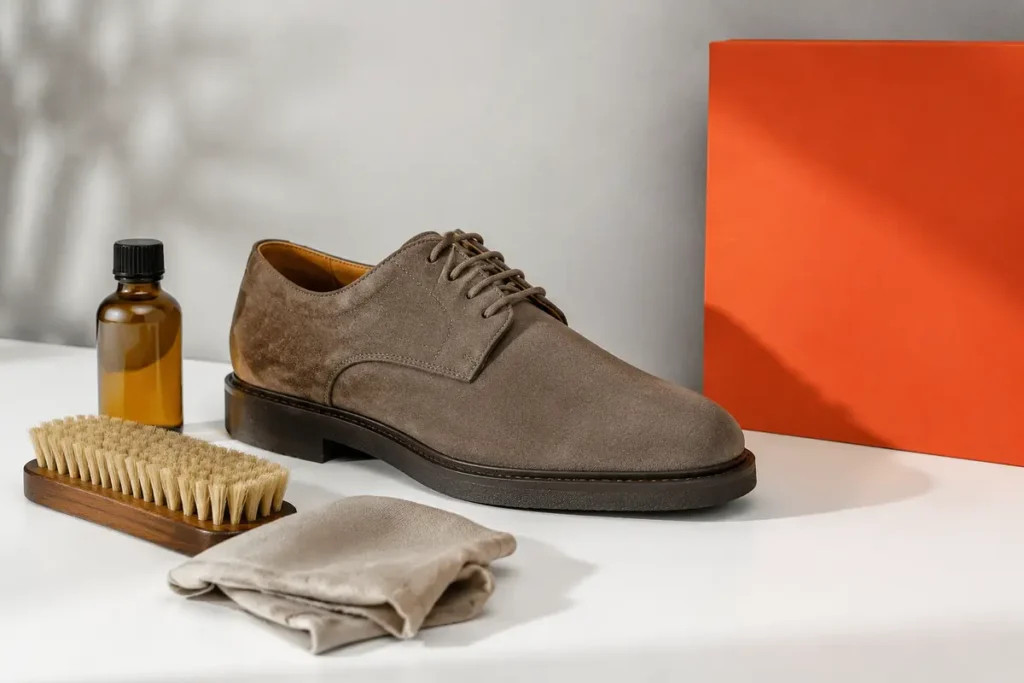
suede shoes: understand the construction first
Suede is made from the inner or split surface of animal hide, while synthetic suede uses manufactured fibres to imitate the texture. Both can look similar, but care instructions may differ. The product label or seller information should identify the material before treatment.
A change in shade is not always a stain. Brushing the nap in different directions reflects light differently. Nubuck, microsuede and brushed textiles also require their own care. Do not assume one suede cleaner is appropriate for every soft, matte surface.
- Suede loafer: A soft smart-casual option where the apron and toe collect dust. A structured sole makes it more practical than a driving sole.
- Suede boot: More coverage for cooler weather, but road splash and wet hems can mark the ankle area.
- Suede heel: A dress finish that needs protection from floor dust, bag hardware and wet event routes.
- Synthetic suede shoe: Often easier to produce consistently, but the maker\’s cleaning instructions still take priority.
Fit comes before appearance
Suede can feel soft and may relax slightly, but it should not be bought painfully tight. Excess rubbing also flattens or polishes the nap at pressure points. Choose adequate toe space and secure hold before considering care.
- Check both shoes in one direction of light for uneven nap, bald areas or colour variation.
- Feel the lining and seams so surface softness is not mistaken for internal comfort.
- Walk indoors and inspect whether heel slip is repeatedly rubbing the collar.
- Confirm the outsole suits the weather and routes where the suede will be worn.
- Photograph any existing shade variation before treatment so changes can be compared.
Use foot measurements with the Shoezhub size guide, but also read the product-specific chart. Width, toe shape, lining and closure can change the fit even when two pairs carry the same size.
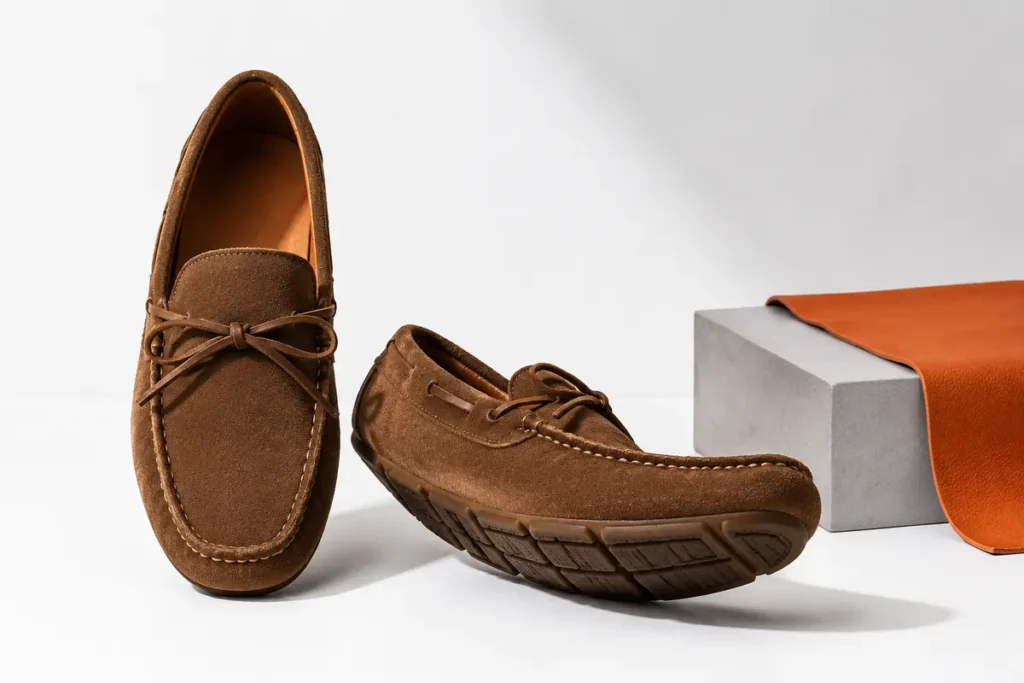
Plan suede around dust and moisture
Suede works well for dry-weather smart-casual dressing, winter outfits and controlled indoor events. It is less forgiving on muddy routes, in heavy rain or where cooking oil and drinks are likely to spill. Choosing another material for difficult conditions is often better than relying on a protector.
Brown, taupe, black and deep coloured suede pairs with denim, chinos, wool, shalwar kameez and relaxed tailoring. The matte surface reduces shine, making it useful when the clothing already carries glossy embroidery or accessories.
Cleaning, drying and storage
Let wet dirt dry before touching it. Use a clean suede brush or tool recommended for the material and work gently. For a local mark, follow the maker\’s guidance and test any product in a hidden area. Avoid household soap, bleach and coloured polish.
If suede becomes damp, blot without rubbing, support the shape and dry naturally away from heaters and direct sun. Brush only when appropriately dry. Store in breathable bags with space so other shoes do not crush or polish the nap.
What to verify before ordering online
Ask whether the upper is genuine suede, synthetic suede or another brushed textile. Look for neutral-light photographs, care instructions and an outsole suited to the intended season. Claims such as waterproof should be supported by the maker, not assumed from a spray.
- Confirm the upper, lining and outsole materials.
- Look for top, side, rear and sole photographs rather than one styled angle.
- Check closure, sole thickness and any stated care instructions.
- Read returns and exchanges before wearing the pair outdoors.
- Check the current shipping and delivery information before checkout.
Shoezhub does not currently promise a suede category; this guide is material-care information for footwear shoppers. Use the live store to see current Shoezhub products; educational examples do not represent guaranteed stock.
A practical planning note
Create a small care routine before a stain appears: one clean suede brush, a neutral cloth, suitable storage and the maker\’s instructions. Keep tools separate from those used with coloured smooth-leather polish. When uncertain about an expensive or deeply stained pair, a professional cleaner or repairer is safer than repeated home experiments. Record the original colour in neutral light so later treatment can be judged accurately.
Common mistakes to avoid
Most suede damage comes from rushed treatment rather than ordinary dry dust. Avoid these mistakes.
- Rubbing a wet mark immediately, which can spread dirt and flatten the nap.
- Using smooth-leather polish, household soap or bleach on a raised suede surface.
- Holding damp shoes against a heater or in direct sun to speed drying.
- Assuming a protector spray makes the complete shoe waterproof in heavy rain or muddy conditions.
A short indoor trial, accurate product information and a realistic view of the route usually reveal these problems before the pair is committed to outdoor wear.
Questions shoppers ask about suede shoes
Can suede shoes get wet?
Brief moisture is not always irreversible, but water can change texture and leave marks. Follow the maker\’s guidance, blot gently and dry naturally.
How often should I brush suede?
Brush when dry dirt or flattened nap needs attention, not automatically after every short wear. Use a clean material-appropriate brush and gentle pressure.
Can I use normal shoe polish on suede?
No. Standard smooth-leather polish can darken and flatten the nap. Use products specifically approved for the exact suede or synthetic material.
Does suede protector make shoes waterproof?
A protector may add resistance when correctly applied, but it does not guarantee waterproofing. Reapplication, construction and exposure all matter.
Choose the pair that suits real use
Suede lasts best when the wearer chooses dry routes, removes dust gently and resists quick chemical fixes. Identify the material, treat small areas cautiously and let the nap recover. Prevention and patience are more reliable than heavy cleaning.
Related reading: Moccasin Shoes: Construction and Fit Guide and Loafers for Men: Types and Outfit Guide.
Sources and review notes
General fit and shoe-selection guidance comes from the American Academy of Orthopaedic Surgeons and Guy’s and St Thomas’ NHS Foundation Trust. Sandal-specific safety points are informed by the American Podiatric Medical Association. This is general information, not medical diagnosis or treatment.