
Types of Heels for Women: A Practical Fit and Style Guide
Heel names can be confusing because retailers mix descriptions of height, heel base, toe shape and upper design. A block heel, for example, describes the base under the rear foot; a sandal describes the upper. One shoe can be both. This guide separates the main terms so shoppers in Pakistan can compare footwear by function instead of choosing from a name or photograph alone.
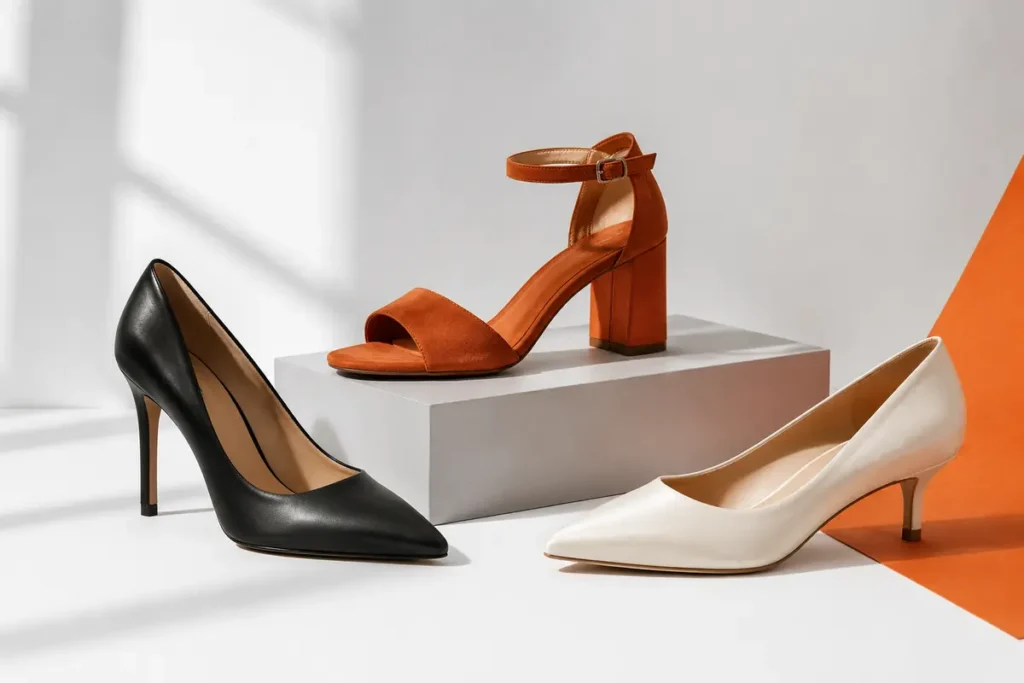
types of heels for women: what the term actually means
The useful way to classify heels is to ask four questions: how high is the rear foot, how wide is the heel base, how securely does the upper hold the foot, and how much of the forefoot is enclosed? These details influence stability and fit more directly than a fashion label.
A lower heel is not automatically comfortable, and a wider heel does not correct a poor toe box. Comfort depends on the complete structure, including pitch, cushioning, strap placement and the surface where the shoe will be worn. Treat each heel name as a description, not a guarantee.
- Block heel: A broad base usually feels steadier on tiled floors and outdoor paths than a narrow heel of the same height. It appears on sandals, pumps and boots.
- Stiletto: A slim heel creates a sharper formal line but offers a small contact point. It requires more careful fit, a stable surface and a walking pace that suits the wearer.
- Kitten heel: This is a short, slim heel, often around the low end of dress footwear. The low rise can be useful, but the narrow base still needs control.
- Wedge: The raised sole continues under much of the foot rather than standing as a separate heel. Weight can feel distributed differently, although sole rigidity and pitch still matter.
Fit comes before styling
Start with a secure heel cup or back strap, enough toe room and a forefoot that does not slide forward. The foot should not have to grip with the toes to keep the shoe on. Test both feet late in the day because feet can differ slightly and may feel fuller after normal activity.
- Stand on a hard, level indoor surface and check whether your weight feels centred rather than pushed sharply onto the toes.
- Walk, turn and stop. The heel should not wobble independently, and the upper should not cut across a joint.
- Check the longest toe and the widest part of the forefoot; neither should be compressed by a pointed or narrow shape.
- Use stairs carefully during an indoor trial. A shoe that feels acceptable while standing may reveal loose straps or heel lift during movement.
- Wear the type of hosiery or insole planned for the event, because even a thin layer can change volume and grip.
When ordering online, compare the brand or seller measurements with the Shoezhub shoe size guide. A familiar size number is a starting point, not proof of fit, because toe shape, lining, straps and construction all change the usable space inside a shoe.
Match the heel to the occasion and surface
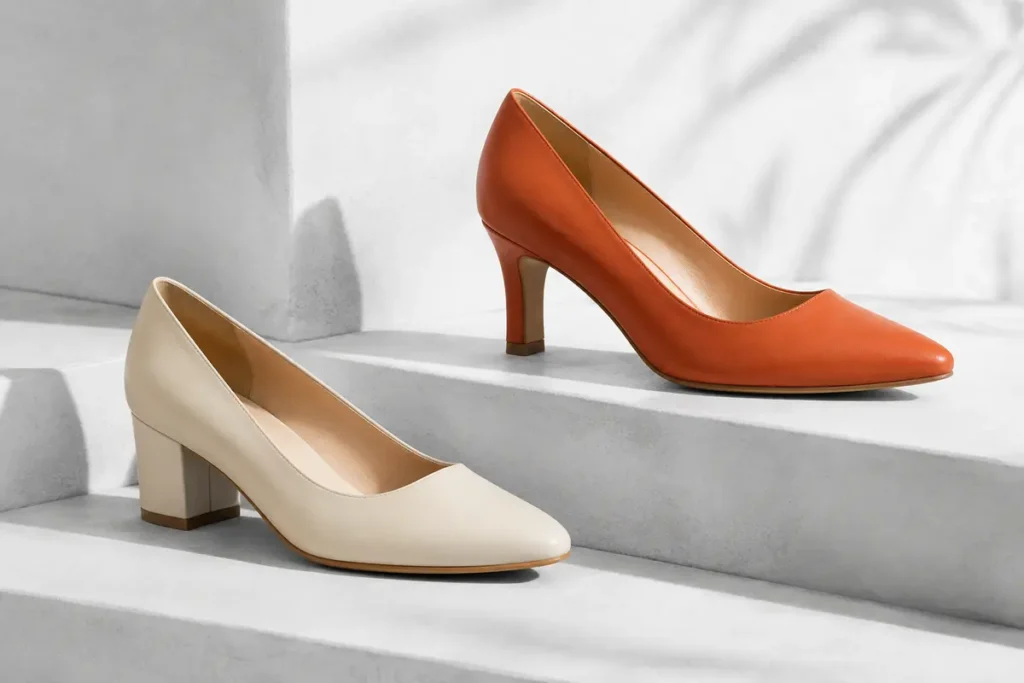
For office days and events with long standing periods, a moderate block heel or lower pump may be easier to manage than a narrow high heel. For wedding halls, polished floors and photography, a slimmer heel can work when the wearer is already comfortable in it. Outdoor lawns, uneven paving and long approaches favour a wider contact point.
Pakistani formal outfits also affect the choice. A long gharara, lehenga or maxi can hide much of the shoe but may catch on exposed decoration. Trousers and shorter hemlines make toe shape and colour more visible. Take the finished outfit length to the shoe trial so the hem is not altered around an unrealistic heel height.
Materials, construction and care
Smooth leather, suede, satin and synthetic uppers respond differently to dust and moisture. Wipe smooth surfaces with a soft dry cloth first. Brush suede only with an appropriate brush after dirt is dry. Test any cleaner on a hidden area and follow the seller or manufacturer instructions.
Store heels upright where the back and straps cannot be crushed. Keep heavily embellished pairs in separate cloth bags so stones and buckles do not scratch nearby shoes. Inspect the heel tip and sole before an event; a worn tip can reduce grip and damage flooring.
Shopping online in Pakistan: what to verify
Useful listings show the heel from the side and rear, give a measured height, identify the closure and include the outsole. If a photograph hides the base or the description uses several conflicting terms, ask the seller before ordering. Do not assume a style is stable simply because it is marketed for weddings.
- Read the upper, lining and sole materials instead of judging only from colour.
- Check whether the listing gives heel height, closure type and a usable size chart.
- Look at the sole pattern and heel attachment in every available product photo.
- Review the returns and exchanges terms before removing labels or wearing the pair outdoors.
- Confirm current charges and service information on the shipping and delivery page.
Shoezhub currently focuses on selected women\’s occasion footwear, including block heels, high-heel sandals and flats. Browse the current Shoezhub store for live availability; an educational guide should never be treated as a promise that a particular style, colour or size is in stock.
Questions shoppers ask about types of heels for women
Which heel type is easiest for beginners?
Many beginners find a lower, wider heel with a secure ankle or back strap easier to control. The best choice still depends on fit, surface and personal balance. Practise indoors before relying on a new pair for a long event.
Are wedges always more comfortable than block heels?
No. A wedge may provide a broad base, but a rigid sole, steep pitch or loose upper can still feel uncomfortable. Compare the whole shoe and walk on the surfaces you expect to use.
Can I wear heels with shalwar kameez?
Yes. Pumps, sandals and block heels can all work. Consider trouser length, fabric movement and the amount of decoration. A simple shoe often balances a heavily worked outfit better than an exact decorative match.
How should I measure heel height?
Measure vertically from the floor to where the heel meets the shoe at the back, while the shoe stands on a level surface. Retailers may measure differently, so use their chart and photos together.
Choose for the way you will wear them
Choose a heel by combining fit, surface, time on your feet and outfit length. The most useful pair is not the one with the most dramatic name; it is the one that stays secure, gives the toes enough room and supports the actual walking required. If discomfort begins during an indoor trial, a longer event is unlikely to improve it.
For a wider comparison, read Block Heels: Comfort, Stability and Styling Guide and 3 Inch Heels: Height, Fit and Wearability.
Sources and review notes
This article uses practical fit guidance from the American Academy of Orthopaedic Surgeons, shoe-selection advice from Guy’s and St Thomas’ NHS Foundation Trust, and sandal safety guidance from the American Podiatric Medical Association. It is general educational information, not a diagnosis. Persistent pain, numbness or skin injury deserves advice from a qualified healthcare professional.