
How to Clean Leather Shoes: A Practical Care Guide for Pakistan
Knowing how to clean leather shoes properly can keep a good pair looking presentable for longer and help prevent avoidable surface damage. The process does not need a large collection of products, but it does require the right order: remove dry dirt, clean gently, allow the leather to dry naturally, then condition and polish when appropriate.
This guide focuses on smooth finished leather shoes, including many formal shoes, loafers and boots. Suede and nubuck need a different method because water, cream and polish can alter their texture. If your pair has a soft, velvety surface, follow the separate suede shoes cleaning and care guide instead.
First, identify the material
Before applying any cleaner, check the product label, box or care instructions. Smooth leather usually has an even surface that can be wiped with a soft cloth. Suede and nubuck have a raised nap. Patent leather has a glossy coated finish, while synthetic leather may look similar to natural leather but respond differently to conditioners and polish.
If the material is uncertain, avoid strong products. Start with dry dust removal and test any cleaner on a small hidden area, such as the inside edge near the heel. A patch test can reveal darkening, colour transfer or an unwanted change in shine before the product reaches a visible section.
What you need to clean leather shoes
A basic kit is usually enough for routine care:
- A soft shoe brush or clean, dry cloth for dust
- A second soft cloth for cleaning
- A mild cleaner labelled for smooth leather
- Leather conditioner suitable for the shoe colour and finish
- Matching or neutral shoe cream or polish, if the finish accepts polish
- A small applicator cloth or brush
- Paper, shoe trees or another clean support for holding the shape
Use separate cloths for dark and light colours. Old polish can transfer easily, especially from black shoes to tan, brown or white leather. Avoid rough kitchen sponges and stiff household brushes because they may scratch the finish.
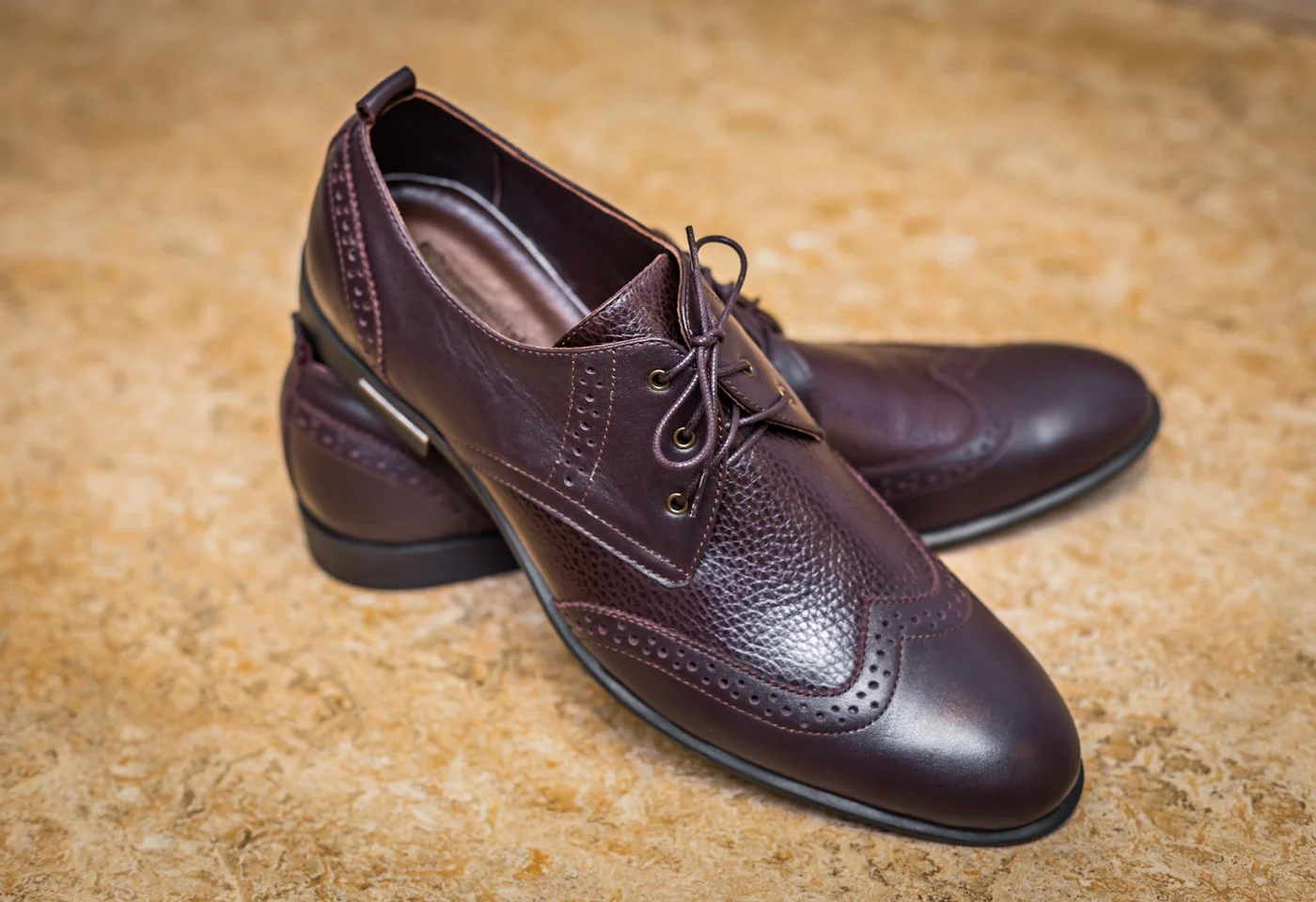
How to clean leather shoes step by step
1. Remove the laces and support the shoe
Take out the laces so you can reach the tongue and the edges around the eyelets. Place a shoe tree inside, or use clean paper to support the toe. Do not pack the shoe so tightly that its shape changes. The purpose is simply to create a stable surface while you work.
If the laces are dirty, clean them separately according to their material. Keeping them away from wet cleaner also prevents marks from being transferred back to the leather.
2. Brush away dry dust
Use a soft brush or dry cloth to remove loose dust, especially around seams, the welt and the point where the upper meets the sole. This step matters in Pakistan, where fine dust can settle quickly during daily travel. Rubbing cleaner directly over grit may drag particles across the surface.
Work with light strokes. For mud, let it dry first, then remove it gently. Trying to wipe wet mud can spread it over a larger area and push it into stitching.
3. Patch-test the cleaner
Read the cleaner’s label and follow its directions. Put a small amount on a cloth rather than pouring it directly onto the shoe. Test it on a hidden area and allow that spot to dry. Continue only if the colour and finish remain acceptable.
This is particularly important for hand-finished, two-tone or lightly dyed leather. Even a product sold for leather may produce different results on different finishes.
4. Clean with a lightly damp cloth
Use a clean cloth that is lightly damp, not dripping. Apply a small amount of suitable leather cleaner and work on one section at a time with gentle circular movements. Pay attention to creases, but do not scrub them aggressively. Wipe away remaining cleaner with another clean cloth.
The goal is controlled cleaning, not soaking. Water can move into seams, lining and the insole if too much is used. A second light pass is safer than saturating the shoe during the first pass.
5. Let the shoes dry naturally
Place the shoes in a ventilated indoor area away from direct sunlight, heaters and hair dryers. Strong heat can dry leather too quickly and may contribute to stiffness, distortion or separation of glued components. Keep the shoes supported while they dry, but replace wet paper if it becomes damp.
Do not apply polish to a wet surface. Wait until the leather feels dry and has returned to its normal colour.
6. Apply conditioner sparingly
Conditioner can help maintain flexibility in suitable smooth leather, but more is not better. Apply a thin, even layer with a soft cloth after completing a patch test. Allow it to absorb according to the product instructions, then wipe away any excess.
Some coated or patent finishes do not need a traditional conditioner. Use the care directions supplied with the shoes instead of assuming every leather product is compatible.
7. Polish and buff when appropriate
Choose a polish that matches the shoe, or use a neutral product when the manufacturer recommends it. Apply a very small amount in thin layers. Thick polish can collect around stitching and crease lines, creating a dull or uneven appearance.
After the polish has set for the recommended time, buff the surface with a clean brush or cloth. Use light, quick strokes until the finish looks even. A natural sheen is usually easier to maintain than a heavy layer of product.
Cleaning black, brown and light-coloured leather
Black leather is generally straightforward to match, but a black cloth or brush should be kept separate from other colours. Brown leather varies from light tan to deep chocolate, and the wrong pigmented polish may noticeably change its tone. Test colour-matched products carefully.
Light leather shows dirt and colour transfer more quickly. Use clean tools, minimal moisture and a product intended for that shade. Do not try to remove every mark with stronger pressure. Repeated rubbing can create a larger pale or shiny patch.
For formal construction and styling context, the guides to Oxford shoes and loafers for men explain common designs and the areas where fit and finish matter.
Leather shoe care during dust, heat and rain
Daily conditions can affect how often shoes need attention. Dusty routes may require a quick brush after each wear, while wet weather calls for patient drying before any conditioner or polish is used. Regular light care is usually safer than waiting for dirt and old product to build up.
If shoes become wet, blot surface water with a soft cloth. Remove the laces, support the shape and let the pair dry indoors with moving air. Avoid leaving damp shoes sealed in a cupboard or plastic bag. Once fully dry, inspect the leather and follow the product’s conditioning instructions if the surface feels unusually dry.
Rotation also helps. Wearing the same pair every day gives moisture from normal use less time to disperse. When possible, allow shoes to rest in a ventilated place before returning them to storage.
Products and methods to avoid
Household shortcuts can be risky because leather finishes differ. Avoid bleach, harsh detergent, abrasive powder, rough scrubbers and products containing strong solvents unless the shoe manufacturer specifically approves them. Baby wipes and multipurpose cleaning wipes may contain ingredients that leave residue or affect the finish.
Petroleum jelly and cooking oils are also poor default choices. They can darken some leather, attract dust or leave an uneven surface. A purpose-made leather product with clear instructions is easier to test and control.
Do not machine-wash smooth leather shoes unless the manufacturer explicitly says they are washable. Immersion can affect the upper, lining, adhesives and shape at the same time.
How to store leather shoes
Clean off dust before storage and make sure the shoes are completely dry. Keep them in a ventilated, shaded place rather than beside a sunny window or heat source. A shoe tree can help support formal shoes, while clean paper can provide temporary shape support.
Do not press heavy items onto the toe box. If the pair is stored in a box, allow it to air after wearing before closing the lid. A breathable shoe bag can reduce dust without trapping the shoe immediately after use.
When cleaning is not enough
Home care cannot repair every problem. Deep cuts, peeling coatings, loose soles, damaged stitching and severe colour loss may need professional attention. Stop cleaning if the surface becomes sticky, colour lifts onto the cloth or the finish changes sharply during a patch test.
Fit problems also need a different solution. Conditioner cannot make a shoe that is too short or reshape a narrow toe box safely. Review the Shoezhub shoe size guide before ordering and check the measurements provided for the specific product.
A simple leather shoe care routine
- Brush away dust after wear when needed.
- Allow the shoes to air before storage.
- Clean marks with a compatible product and a patch test.
- Condition only when suitable for the leather and finish.
- Apply polish in thin layers rather than allowing buildup.
- Inspect soles, stitching and heel wear before damage becomes worse.
If you are comparing footwear styles, browse the men’s footwear collection or view the latest products in the Shoezhub store. Always rely on the material and care information shown for the exact pair.
Frequently asked questions
How often should leather shoes be cleaned?
Remove visible dust whenever needed. A deeper clean should depend on wear, weather and buildup rather than a fixed weekly schedule. Excessive cleaning can be as unhelpful as neglect.
Can leather shoes be cleaned with water?
A lightly damp cloth may be suitable for many smooth finished leathers, but soaking is not. Check the shoe’s care instructions and patch-test first because finishes respond differently.
Can I use the same method for suede shoes?
No. Suede and nubuck have a raised surface that can be altered by smooth-leather cream, conditioner or polish. Use tools and products specifically intended for suede.
What should I do if leather shoes get wet?
Blot away surface moisture, remove the laces, support the shape and dry the shoes naturally in a ventilated indoor area. Keep them away from direct heat and wait until they are fully dry before applying care products.
Is neutral polish safe for every leather colour?
Not automatically. Neutral polish reduces colour-matching concerns, but it may still change the finish or leave residue. Check compatibility and test it on a concealed area.
How can I stop leather shoes from cracking?
Avoid strong heat, repeated soaking and excessive product buildup. Keep suitable leather clean, use compatible conditioner sparingly and store the shoes dry. Existing cracks may require professional repair and cannot always be reversed.
Keep the process gentle and consistent
The safest answer to how to clean leather shoes is a measured routine. Identify the material, remove dry dirt first, use minimal moisture, test every product and let the shoes dry naturally. Conditioning and polishing come after cleaning, not before it.
Small, regular steps make leather footwear easier to maintain and reduce the temptation to use harsh shortcuts. When the care label and general advice differ, follow the instructions supplied for the specific shoe.