
Oxford Shoes: Types, Lacing and Formal Wear Guide
Oxford shoes are one of the clearest formal footwear categories because their lacing structure can be identified in photographs. They work with suits, formal trousers and many wedding outfits, but retailers sometimes label any dress shoe as an Oxford. Learning the closed-lacing construction helps shoppers compare the right products before considering leather finish, toe detail and colour.
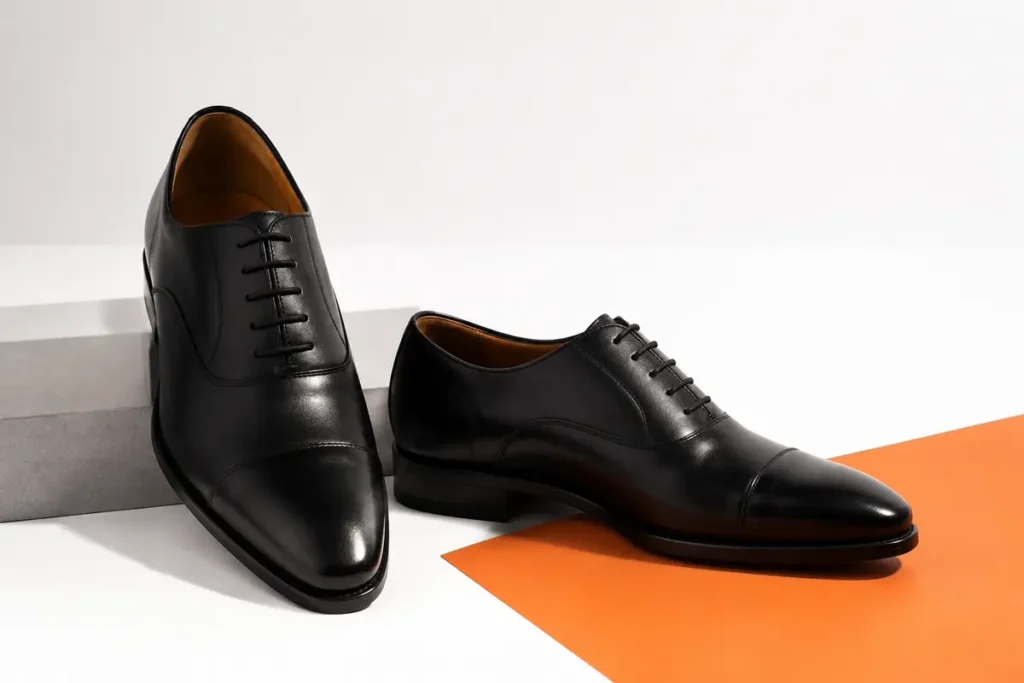
Oxford shoes: identify the structure
An Oxford has eyelet tabs stitched underneath the front section of the upper, creating closed lacing. When tied, the sides meet in a neat V or narrow line. This differs from a Derby, where the eyelet tabs sit openly on top and can spread farther apart.
Closed lacing creates a cleaner formal line but may provide less adjustment for a high instep or wide foot than open lacing. Oxford is a construction term, while cap toe, plain toe, wingtip and wholecut describe other parts of the design.
- Cap-toe Oxford: A horizontal seam defines the toe cap. Black leather versions are a standard business and formal choice.
- Plain-toe Oxford: The front has no separate cap seam, giving a restrained appearance that can be formal or smart-casual.
- Wholecut Oxford: The upper is made from a single main piece with minimal seams. It looks sleek but still needs correct last shape.
- Brogue Oxford: Decorative perforations add texture. More broguing generally makes the shoe feel less strict, though context matters.
Fit and movement checks
The lacing should close neatly without the quarters overlapping or remaining widely forced apart. Toes need room, the heel should stay controlled and the widest part of the foot should align with the shoe. New leather may soften but should not begin painfully tight.
- Try with the dress socks planned for wear and lace from the bottom with even tension.
- Check that the V-shaped opening is balanced rather than pulled sharply to one side.
- Walk and confirm the heel does not lift excessively from the structured counter.
- Press the toe area only to locate space; do not expect a long pointed shape to match toe length visually.
- Flex at the forefoot and inspect whether the outsole suits polished floors and outdoor approaches.
Start with measured foot length and the Shoezhub size guide, then follow the exact product chart. Last shape, width, lining, lacing and socks can make the same printed size fit differently.
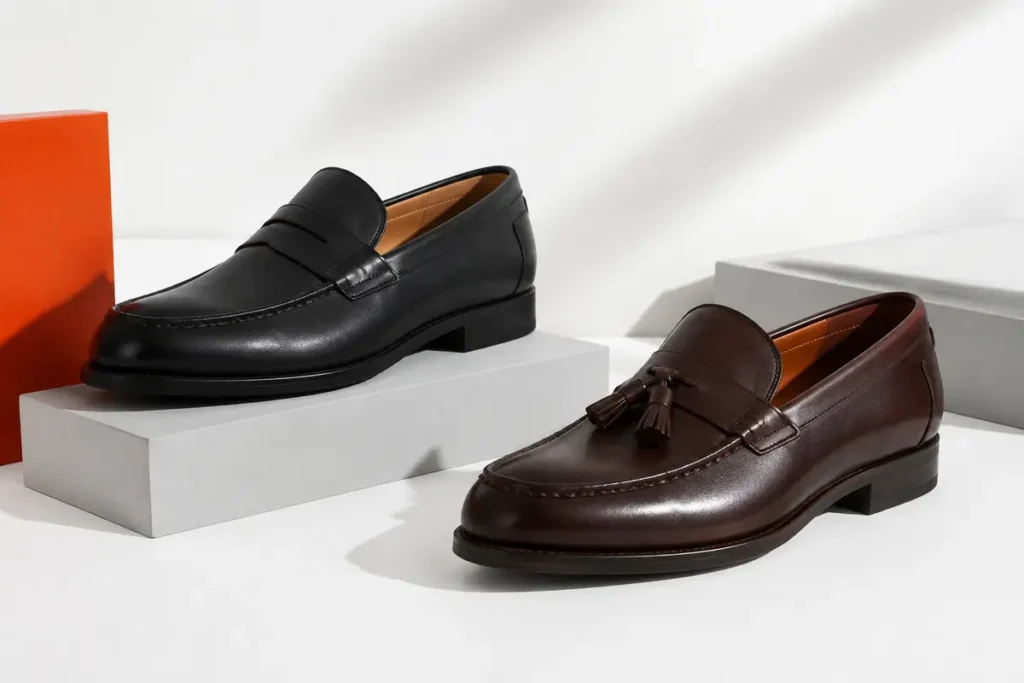
Choose formality through colour and detail
Black cap-toe Oxfords are a reliable choice for dark business suits and formal evening clothing. Dark brown suits many navy, grey and earth-tone combinations. Broguing, suede and lighter brown reduce strictness and work well in smart-casual settings.
For Pakistani weddings, Oxfords can support sherwanis, prince coats and tailored shalwar kameez when the last and finish match the clothing. Highly shiny shoes beside matte fabric create a stronger contrast; softly polished leather often looks more balanced.
Materials, care and useful limits
Brush off dust, use material-appropriate conditioner or polish and allow shoes to rest between wears. Insert suitable shoe trees only if they fit without stretching. Suede Oxfords require dry brushing rather than smooth-leather polish.
Rotate pairs and dry naturally after moisture. Replace worn heel top pieces or soles through a competent repairer before damage spreads. Do not store tightly laced; loosen the upper enough to preserve shape.
What to verify before ordering
A correct listing should show the lacing clearly and identify upper and sole materials. Ask about width or last shape when available. The word Oxford in a title is not proof if photographs show open Derby-style eyelet tabs.
- Read the stated upper, lining and outsole materials.
- Check side, rear, top and sole photographs.
- Confirm closure, heel or sole height and intended use.
- Review returns and exchanges before outdoor wear.
- Check current shipping and delivery information before checkout.
Shoezhub does not currently claim a public men\’s Oxford category, so this guide prepares future shoppers without implying stock. Check the live Shoezhub catalogue rather than treating an educational article as a stock promise.
A practical planning note
A formal shoe should be tested with the complete lower half of the outfit. Wear the intended socks and trousers, then sit, stand, walk and use steps. Check that the trouser opening falls cleanly over the upper and that the toe length does not look exaggerated. For weddings, include the outdoor approach in the plan; a sleek sole suitable for a hall may need greater caution on paving.
Common mistakes to avoid
Formal labels are sometimes applied loosely online. These checks prevent category and fit errors.
- Calling any lace-up dress shoe an Oxford without confirming that the eyelet tabs form closed lacing.
- Forcing the lacing completely shut on a high instep or wide foot instead of trying a more suitable last or Derby construction.
- Choosing a long pointed toe by appearance and ignoring usable space around the actual toes.
- Applying heavy polish before checking that the shade and finish suit the event clothing.
A short indoor trial, accurate product information and a realistic view of the route usually reveal these problems before the pair is committed to outdoor wear.
Questions shoppers ask about Oxford shoes
What makes a shoe an Oxford?
The eyelet tabs are stitched under the vamp, creating closed lacing. Toe seams, broguing and colour do not determine whether it is an Oxford.
Are Oxford shoes only for suits?
No. Dark polished pairs suit formal tailoring, while brown, suede or brogued versions can work with chinos and smart-casual clothing.
Are Oxfords suitable for wide feet?
Some lasts and widths can work, but closed lacing offers less expansion than many Derby shoes. Use measurements and do not force the lacing shut.
Can Oxfords be worn with shalwar kameez?
Yes, especially with structured, tailored or formal versions. Match the shoe\’s level of shine and detail to the outfit and event.
Choose according to purpose
Identify closed lacing first, then compare last shape, toe detail, material and sole. A genuine Oxford category label helps with formality, but a well-fitted pair in the right colour will matter more than the most expensive finish.
Related guides: Loafers for Men: Types, Fit and Outfit Guide and Moccasin Shoes: Construction and Fit Guide.
Sources and review notes
Fit and general shoe-selection points are based on guidance from the American Academy of Orthopaedic Surgeons and Guy’s and St Thomas’ NHS Foundation Trust. This article is general education, not personalised medical advice. Persistent pain, altered sensation or injury should be discussed with a qualified healthcare professional.