
Loafers for Men: Types, Fit and Outfit Guide
Loafers for men cover a broad family of low, lace-free shoes used with suits, chinos, jeans and traditional clothing. Because the upper has no laces, fit depends strongly on the heel shape, vamp height and width. A loafer that looks correct while standing may lift at the heel or press the instep after walking.
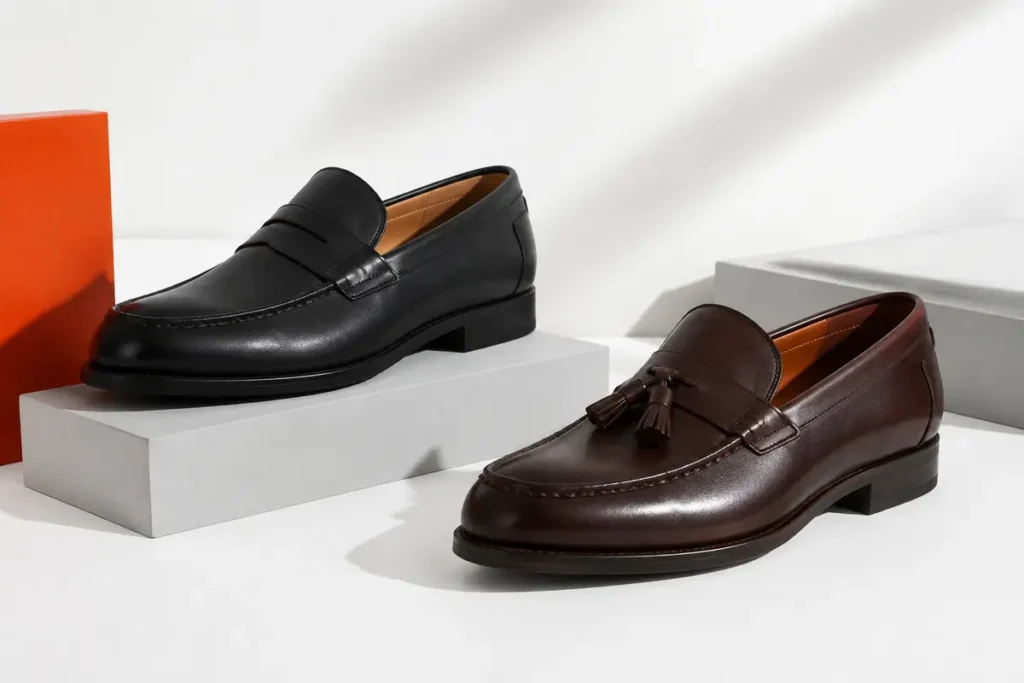
loafers for men: identify the structure
A loafer is a slip-on shoe with a low upper and a separate sole. Common versions use a penny strap, tassels, metal bit, plain apron or driving sole. The style can range from relaxed suede to polished formal leather.
Moccasin and loafer are often mixed. Loafer describes the slip-on style; moccasin describes construction or stitched-toe influence. Driving loafers commonly use moccasin-like uppers and rubber pods, while structured dress loafers use firmer soles and heels.
- Penny loafer: A strap with a central slot crosses the vamp. Clean leather versions move easily between business-casual and formal wear.
- Tassel loafer: Decorative tassels add movement and detail. Dark leather can be dressy; suede versions feel more relaxed.
- Bit loafer: A metal ornament creates a sharper focal point. Keep other hardware controlled and inspect how securely it is attached.
- Driving loafer: A soft upper and rubber-pod sole suit light casual use and driving, not necessarily long street walking.
Fit and movement checks
A loafer should hold the heel and instep without painful tightness. Because there are no laces, a wrong volume cannot be adjusted much. Try the exact socks or no-show socks planned for wear and walk enough indoors to reveal lifting.
- Check heel lift at normal pace; slight movement may occur, but the shoe should not leave the foot.
- Feel the vamp across the instep for pressure that may worsen after the foot warms.
- Confirm the widest part of the foot matches the widest part of the shoe.
- Inspect apron stitching, decoration and sole attachment from close range.
- Test the outsole for the intended route, especially if it uses thin leather or driving pods.
Start with measured foot length and the Shoezhub size guide, then follow the exact product chart. Last shape, width, lining, lacing and socks can make the same printed size fit differently.
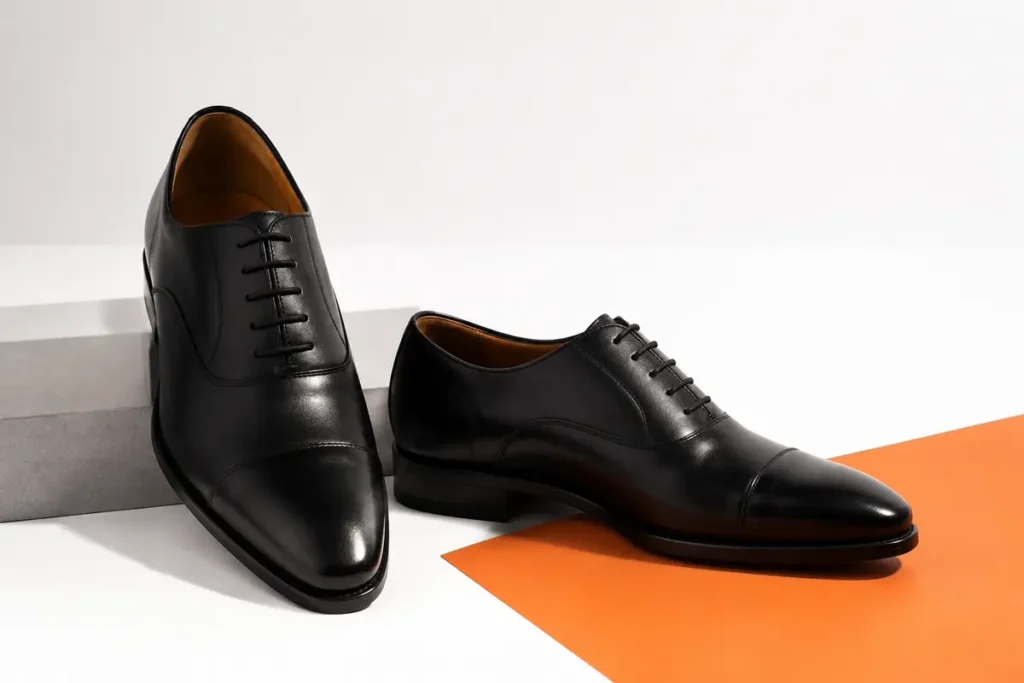
Set the outfit through material and sole
Black and dark-brown leather loafers can work with suits, prince coats and tailored trousers when the shape is sleek. Penny and bit styles often read cleaner than heavily casual driving designs. Suede, lighter brown and chunky soles move towards smart-casual wear.
With shalwar kameez, choose a loafer whose last and decoration suit the fabric. A minimal dark pair complements formal clothing; textured suede works with relaxed cotton or winter layers. No-show socks create a bare-ankle look while managing moisture better than completely bare feet.
Materials, care and useful limits
Use smooth-leather care only on smooth leather and a suitable brush on suede. Wipe dust from apron seams and check metal hardware for movement. Let the lining dry between wears.
Use a shoehorn to reduce damage at the heel counter. Avoid crushing loafers under heavier footwear. Thin driving soles need regular inspection because wear may reach the upper quickly.
What to verify before ordering
Look for width, vamp and heel photographs, not only a front view. Check whether the outsole is full rubber, leather, lugged or podded. A seller calling a driving shoe formal does not change its practical limits.
- Read the stated upper, lining and outsole materials.
- Check side, rear, top and sole photographs.
- Confirm closure, heel or sole height and intended use.
- Review returns and exchanges before outdoor wear.
- Check current shipping and delivery information before checkout.
Shoezhub does not currently claim a live men\’s loafer range; this is an informational category guide. Check the live Shoezhub catalogue rather than treating an educational article as a stock promise.
A practical planning note
Plan loafers around sock choice because it changes both fit and appearance. Dress socks add little bulk and suit tailoring; thicker socks can crowd a close vamp; no-show socks need enough coverage to stay in place. Test the pair with each planned combination before removing labels. If the loafer is for frequent rotation, prioritise replaceable heel and sole construction over decorative hardware that dominates one outfit.
Common mistakes to avoid
Loafers have little adjustment after purchase, so volume mistakes are harder to correct. Avoid these errors.
- Buying a tight instep because leather may soften, even though painful pressure is present from the first trial.
- Ignoring heel lift while standing and failing to test a normal walking pace indoors.
- Using thin driving loafers for long street routes because the upper looks like a structured dress shoe.
- Wearing bare feet repeatedly without managing friction, moisture and drying time.
A short indoor trial, accurate product information and a realistic view of the route usually reveal these problems before the pair is committed to outdoor wear.
Questions shoppers ask about loafers for men
Can men wear loafers with a suit?
Yes. A sleek dark leather penny, tassel or bit loafer can work with many suits, depending on the event and dress expectations.
Should loafers be tight at first?
They should be secure, not painful. Some materials relax slightly, but buying a compressed fit in hope of stretching is risky.
Do I need socks with loafers?
Dress socks suit formal outfits, while no-show socks support a bare-ankle look and help manage friction and moisture. The choice also affects fit.
Are driving loafers good for daily walking?
They are often designed for light use and may have thin podded soles. Choose a more protective outsole for long or rough routes.
Choose according to purpose
A loafer earns versatility through correct volume and the right sole. Choose the material and decoration for the outfit, but test heel hold and instep pressure before keeping the pair. Slip-on convenience cannot compensate for a last that does not fit.
Related guides: Oxford Shoes: Types, Lacing and Formal Guide and Moccasin Shoes: Construction and Fit Guide.
Sources and review notes
Fit and general shoe-selection points are based on guidance from the American Academy of Orthopaedic Surgeons and Guy’s and St Thomas’ NHS Foundation Trust. This article is general education, not personalised medical advice. Persistent pain, altered sensation or injury should be discussed with a qualified healthcare professional.