
Sneakers vs Joggers: What Is the Difference?
In Pakistan, joggers often means athletic lace-up shoes used for walking, exercise or casual wear, while sneakers is a broader fashion and lifestyle term. The names overlap, and some shops use either word for any sporty shoe. The safer way to compare them is by intended activity, upper, cushioning, flexibility, grip and the evidence provided by the manufacturer.
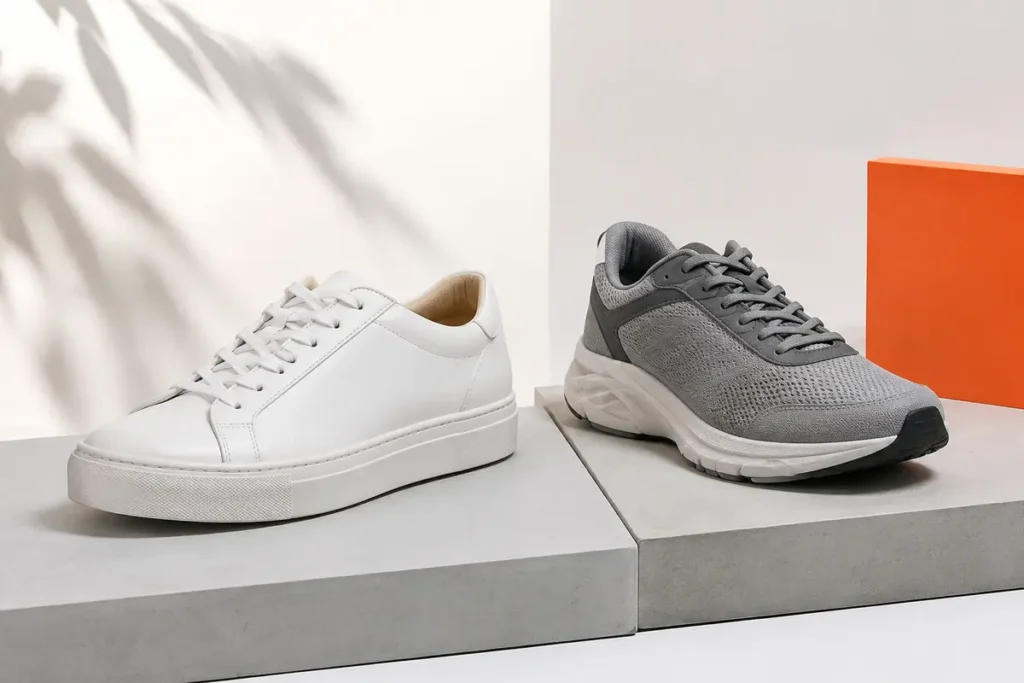
difference between joggers and sneakers: identify the structure
Sneaker is a broad category of rubber-soled casual or athletic-looking footwear. Jogger is a regional retail term commonly used for running-style or training shoes. Neither word alone proves that a shoe is suitable for running, gym work or a medical need.
A white leather lifestyle sneaker may be durable and easy to style but relatively flat and firm. A running-style jogger may use mesh, shaped cushioning and a flexible forefoot. Visual cushioning is not proof of performance; use the product\’s intended-use statement and specifications.
- Lifestyle sneaker: Designed mainly for casual wear and styling. Materials may include leather, synthetic uppers or canvas.
- Running-style jogger: Built or styled around forward movement, often using mesh and a cushioned midsole. Actual running suitability must be confirmed.
- Training shoe: Designed for multi-directional gym or court movement, usually with a broader stable base than many running shoes.
- Walking shoe: Prioritises repeated walking motion and everyday comfort, but construction varies widely between makers.
Fit and movement checks
Sporty shoes should allow toe movement, hold the heel and secure the midfoot without painful lace pressure. Use the socks planned for activity and test the pair later in the day. Do not choose extra length simply to gain width.
- Stand and confirm a usable toe margin without the heel sliding.
- Walk, stop and change direction to identify movement inside the shoe.
- Check where the sole flexes and whether it matches the forefoot.
- Inspect outsole rubber coverage and tread for the intended surface.
- Read the product\’s stated use rather than inferring performance from a thick sole.
Start with measured foot length and the Shoezhub size guide, then follow the exact product chart. Last shape, width, lining, lacing and socks can make the same printed size fit differently.
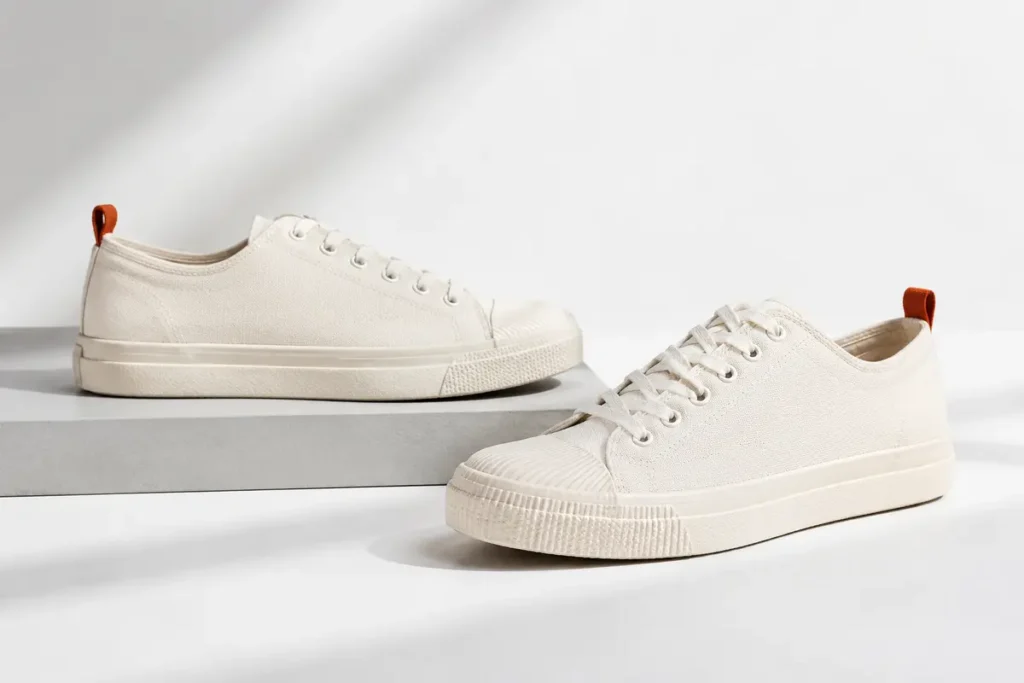
Choose by activity before colour
For daily casual outfits, a lifestyle sneaker may provide the right balance of appearance and light walking. For running or structured exercise, use footwear designed and specified for that activity. A fashion shoe with a sporty profile is not automatically an athletic tool.
White sneakers pair easily with denim, chinos, casual shalwar kameez and dresses but show dust quickly. Mesh joggers may feel lighter in warm conditions, while dark soles and uppers hide some marks. Cleaning method must follow the material and construction.
Materials, care and useful limits
Remove dry dirt first, clean the upper by material and let shoes dry naturally. Do not machine wash unless the maker allows it. Heat can distort foam, glue and synthetic components.
Rotate activity shoes, loosen laces before removal and inspect outsole wear. Replace them when the sole is uneven, the upper tears, cushioning feels collapsed or fit changes. There is no universal replacement distance for every person and product.
What to verify before ordering
Look for an intended-use description, upper and midsole materials, weight if provided, outsole photographs and a measured size chart. Avoid unsupported claims such as orthopedic, performance or professional simply because they appear in a title.
- Read the stated upper, lining and outsole materials.
- Check side, rear, top and sole photographs.
- Confirm closure, heel or sole height and intended use.
- Review returns and exchanges before outdoor wear.
- Check current shipping and delivery information before checkout.
Shoezhub does not currently claim a live sneaker or jogger category; this comparison is educational. Check the live Shoezhub catalogue rather than treating an educational article as a stock promise.
A practical planning note
Build a simple activity list before shopping: casual errands, work, walking, gym training or running. Rank the one or two activities that matter most and read product specifications for those uses. A single shoe can cover casual walking and styling, but demanding exercise may need a purpose-built design. If the product page avoids an intended-use statement, do not fill the gap with assumptions based on the sole shape.
Common mistakes to avoid
Retail language can make sporty shoes sound more capable than their specifications. Avoid these mistakes.
- Assuming a thick white midsole proves that a lifestyle sneaker is designed for running.
- Using jogger as evidence of performance when the listing gives no intended activity or construction details.
- Choosing extra length to gain width, which can create heel movement and poor flex alignment.
- Replacing an activity shoe by a universal distance rule instead of inspecting fit, outsole wear and structural condition.
A short indoor trial, accurate product information and a realistic view of the route usually reveal these problems before the pair is committed to outdoor wear.
Questions shoppers ask about difference between joggers and sneakers
Are joggers and sneakers the same?
The words overlap. In Pakistan, joggers usually suggests running-style athletic shoes, while sneakers covers a wider casual category. Construction and intended use are more reliable.
Can I run in ordinary sneakers?
Lifestyle sneakers may not be designed for running. Choose a shoe whose maker states that purpose and whose fit and condition suit the activity.
Are thick soles always more comfortable?
No. Thickness does not reveal firmness, stability, geometry or fit. Try the complete shoe and use specifications rather than appearance alone.
Can joggers be worn with shalwar kameez?
Yes for casual and sporty combinations. Keep proportions controlled and follow the event or workplace dress expectations.
Choose according to purpose
Resolve sneakers versus joggers by asking what the shoe is built to do. If the page provides only a sporty photograph and no intended use, treat it as casual footwear. Activity, fit and outsole should lead; colour comes after.
Related guides: Canvas Shoes: Fit, Care and Everyday Styling and Inner Soles for Shoes: Fit and Replacement Guide.
Sources and review notes
Fit and general shoe-selection points are based on guidance from the American Academy of Orthopaedic Surgeons and Guy’s and St Thomas’ NHS Foundation Trust. This article is general education, not personalised medical advice. Persistent pain, altered sensation or injury should be discussed with a qualified healthcare professional.